
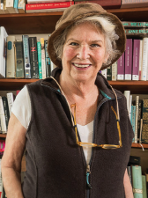
Annie Dillard…1945-2026
At 80, I am finally old enough to read Annie Dillard. I also was late to join the Mary Oliver appreciation crowd. I attribute my tardiness to early Christian formation that frightened me more than it made me feel safe. Or loved.
I was made to be suspicious of anything about God or creation that wasn’t directly from the Holy Bible.
It took more than forty years to rid myself of the holy terror instilled in me. Writers such as Dillard and Oliver helped.
Where to start a remembrance of Annie Dillard? Let’s go back in time a bit.
Children in the 1950s used playground chants like “I made you look, I made you look, I made you read a story book” to tease each other when someone looked at something they pointed at.
One child would say “look” to trick another person into turning their head.
The rhyming chant was a quick way to claim a silly schoolyard victory.
When I learned last week of the death of author Annie Dillard, I realized the world was lessened by her passing. Lessened greatly. And I felt called to write a remembrance.
But then this little 1950s ditty started playing in my head, “I made you look….”
At first I felt something akin to shame. This great woman of words and thought had died. And how did I mark the passing? With words from a near-ancient childish chant.
But thankfully I did not get mired in my shame. Instead, I came to realize that, in spite of me, the unconscious had offered up a proper salute to Annie Dillard: She made us look. And look closely.
My new best friend, Art Intelligence, answered my question about where to start with Dillard for a deep dive into her spirituality, or theology.
A professed follower of Christianity, Dillard was not religious in the m sense of depending on a church, or a denomination, to do her thinking for her. She fits well, I believe, in the “spiritual not religious” queue of faith discussions in this generation.
While she doesn’t present a “systematic” theology, her microscopic look at the natural world nonetheless produced some ingredients of her faith, and perhaps ours.
Back to my friend Art, here are suggestions of the three best theologically bent books and the order in which to read:
For the Time Being (1999).
It is only about 220 pages, and it is extraordinarily dense. Dillard brings together birth, death, suffering, evil, God, Judaism, Christianity, mysticism, science, evolution, human uniqueness, and the sheer strangeness of existence. She moves from a maternity ward to the Holocaust, from sand and clouds to the Hasidic tradition, from Teilhard de Chardin to questions about divine omnipotence and mercy.
And here’s the particularly interesting thing: Dillard’s own website says that Pilgrim at Tinker Creek, Holy the Firm, and For the Time Being can be understood as a trilogy concerned with natural evil.
So if your question is, “What does Annie Dillard believe about God when she looks directly at the terrible and beautiful world?” Perhaps start here.
It’s not a theology book in the conventional sense. As one person says, “She doesn’t give you a system. She gives you a wrestling match.”
Holy the Firm
This is the one to read second, even though it was published in 1977.
It’s tiny—around 75 pages—but it may be the most concentrated dose of Dillard’s theology. She deliberately set out to write about what happened around her on a Puget Sound island over three days, and then an airplane crashes and a young girl is horribly burned. Dillard finds herself confronting the classic theological problem: If God is omnipotent, omniscient, and merciful, what do we do with suffering?
There’s a moth burning in a candle flame. There’s baptism. There’s beauty. There’s violence. There’s God.
According to Art, this offers the reader that astonishing Dillard quality of looking at something almost unbearably closely until it becomes a theological event.
Pilgrim at Tinker Creek
Only after those two would Art suggest we go to the famous one.
It’s the 1974 book that won the Pulitzer Prize, and it’s often treated as “the Annie Dillard book.” But if you come to it expecting a nature book, you can miss what she’s doing.
Dillard herself says that the book attempted to describe the Creator, if any, by studying creation.
That’s a very important key to her.
The creek, the praying mantis, the wasps, the sunlight, the parasites, the violence of nature—all of it becomes evidence in a gigantic argument about what sort of universe this is.
And that is why Dillard can be simultaneously filled with wonder and horrified by creation.
Other Dillard offerings:
Teaching a Stone to Talk
It’s a collection of essays rather than one sustained argument, and it contains the famous essay “An Expedition to the Pole,” which is one of the best places to encounter Dillard’s thinking about religious practice.
This is also where her famous “lash yourself to the pew” passage comes from—the idea that Christians have vastly underestimated what they are asking for when they pray for the Holy Spirit.
That passage is not an isolated bit of Dillard eccentricity. It is a window into her whole conception of Christianity: God is not a comfortable religious accessory. If the living God is actually present, something enormous is supposed to happen.
If you’re up for more, here’s another book Art thinks you would eventually want to read.
An American Childhood (1987).
Not because it’s primarily theological—it isn’t—but because it lets you meet the person who became Annie Dillard.
It is a memoir of her childhood in Pittsburgh, and it helps explain her extraordinary habits of attention: collecting facts, looking obsessively at things, reading voraciously, experiencing the world almost as an enormous mystery that needs to be examined. Her official bibliography identifies it as her memoir.
So, Art suggests saving that one for after you’ve fallen—or perhaps stumbled—into Dillard’s theological universe.
For more, here’s the official website https://www.google.com/gasearch?q=annie%20dillard%20website&tbm=&source=sh/x/gs/m2/5
Leave a Reply
You must be logged in to post a comment.