Is evil a “being,” a feeling, some personification of everything dark and corrupt in the world?
Some call it the devil.
Some call it Satan.
How do you know it? For me, it ‘s just simpler to call it the Devil.
I have had several acute experiences with evil and, may I say, with Evil.
In the fiction world Stephen King excels at weaving evil into plot line. In particular, his book Needful Things shows how the most innocent, kindliest of persons among us can commit dastardly deeds in order to obtain a simple heart’s desire.
While evil has an agent by the name of Leland Gaunt, his victims encounter evil in their own true nature: How far will I go to get what I want?
The Bible, both Old and New Testaments—does not offer one single, neatly worked-out doctrine of Satan. The imagery that we can find develops from the Hebrew Bible into the New Testament, and Revelation gathers several strands into an extraordinarily vivid cosmic drama.
The mid-century Christian writer C.S. Lewis understood something important about our fascination with Satan.
He warned against two opposite mistakes: refusing to believe in the reality of evil at all, and becoming so fascinated by evil that evil itself becomes the center of our attention.
Both mistakes are possible.
As for me, I encountered a presence of evil several times over a lifetime. One was especially vivid.
I was looking for a home that would accommodate my mother and me. She was growing more infirm, and we needed to be under one roof.
While touring the leading prospect, I noticed the master bedroom was a couple of steps below the main level. The agent motioned for me to go first.
Before moving, I scanned the interior with one sweeping glance, observing how dark it was, how ponderous was the heavy wooden furniture, and how off-putting were the twin six-foot-tall suits of armor flanking the kind-sized bed.
Wishing to move on, I raised a foot–but before my foot touched the step I felt a force. That’s the best description. A force, an impediment, that kept me from entering the room.
Message received. I quickly pivoted and headed back. The real estate salesperson was perplexed. I offered a weak smile paired with “Gotta go.”
I believe with all certainty that something extremely wicked had occurred in that space. It wasn’t safe, not even then nor for me. But I was spared by the spirit of God tapping the brakes for me.
That was a close encounter with whatever we call evil. What about you? Any encounters? Experiences? Close calls? I would love to hear from you.
At 80, I am finally old enough to read Annie Dillard. I also was late to join the Mary Oliver appreciation crowd. I attribute my tardiness to early Christian formation that frightened me more than it made me feel safe. Or loved.
I was made to be suspicious of anything about God or creation that wasn’t directly from the Holy Bible.
It took more than forty years to rid myself of the holy terror instilled in me. Writers such as Dillard and Oliver helped.
Where to start a remembrance of Annie Dillard? Let’s go back in time a bit.
Children in the 1950s used playground chants like “I made you look, I made you look, I made you read a story book” to tease each other when someone looked at something they pointed at.
One child would say “look” to trick another person into turning their head.
The rhyming chant was a quick way to claim a silly schoolyard victory.
When I learned last week of the death of author Annie Dillard, I realized the world was lessened by her passing. Lessened greatly. And I felt called to write a remembrance.
But then this little 1950s ditty started playing in my head, “I made you look….”
At first I felt something akin to shame. This great woman of words and thought had died. And how did I mark the passing? With words from a near-ancient childish chant.
But thankfully I did not get mired in my shame. Instead, I came to realize that, in spite of me, the unconscious had offered up a proper salute to Annie Dillard: She made us look. And look closely.
My new best friend, Art Intelligence, answered my question about where to start with Dillard for a deep dive into her spirituality, or theology.
A professed follower of Christianity, Dillard was not religious in the m sense of depending on a church, or a denomination, to do her thinking for her. She fits well, I believe, in the “spiritual not religious” queue of faith discussions in this generation.
While she doesn’t present a “systematic” theology, her microscopic look at the natural world nonetheless produced some ingredients of her faith, and perhaps ours.
Back to my friend Art, here are suggestions of the three best theologically bent books and the order in which to read:
For the Time Being (1999).
It is only about 220 pages, and it is extraordinarily dense. Dillard brings together birth, death, suffering, evil, God, Judaism, Christianity, mysticism, science, evolution, human uniqueness, and the sheer strangeness of existence. She moves from a maternity ward to the Holocaust, from sand and clouds to the Hasidic tradition, from Teilhard de Chardin to questions about divine omnipotence and mercy.
And here’s the particularly interesting thing: Dillard’s own website says that Pilgrim at Tinker Creek, Holy the Firm, and For the Time Being can be understood as a trilogy concerned with natural evil.
So if your question is, “What does Annie Dillard believe about God when she looks directly at the terrible and beautiful world?” Perhaps start here.
It’s not a theology book in the conventional sense. As one person says, “She doesn’t give you a system. She gives you a wrestling match.”
Holy the Firm
This is the one to read second, even though it was published in 1977.
It’s tiny—around 75 pages—but it may be the most concentrated dose of Dillard’s theology. She deliberately set out to write about what happened around her on a Puget Sound island over three days, and then an airplane crashes and a young girl is horribly burned. Dillard finds herself confronting the classic theological problem: If God is omnipotent, omniscient, and merciful, what do we do with suffering?
There’s a moth burning in a candle flame. There’s baptism. There’s beauty. There’s violence. There’s God.
According to Art, this offers the reader that astonishing Dillard quality of looking at something almost unbearably closely until it becomes a theological event.
Pilgrim at Tinker Creek
Only after those two would Art suggest we go to the famous one.
It’s the 1974 book that won the Pulitzer Prize, and it’s often treated as “the Annie Dillard book.” But if you come to it expecting a nature book, you can miss what she’s doing.
Dillard herself says that the book attempted to describe the Creator, if any, by studying creation.
That’s a very important key to her.
The creek, the praying mantis, the wasps, the sunlight, the parasites, the violence of nature—all of it becomes evidence in a gigantic argument about what sort of universe this is.
And that is why Dillard can be simultaneously filled with wonder and horrified by creation.
Other Dillard offerings:
Teaching a Stone to Talk
It’s a collection of essays rather than one sustained argument, and it contains the famous essay “An Expedition to the Pole,” which is one of the best places to encounter Dillard’s thinking about religious practice.
This is also where her famous “lash yourself to the pew” passage comes from—the idea that Christians have vastly underestimated what they are asking for when they pray for the Holy Spirit.
That passage is not an isolated bit of Dillard eccentricity. It is a window into her whole conception of Christianity: God is not a comfortable religious accessory. If the living God is actually present, something enormous is supposed to happen.
If you’re up for more, here’s another book Art thinks you would eventually want to read.
An American Childhood (1987).
Not because it’s primarily theological—it isn’t—but because it lets you meet the person who became Annie Dillard.
It is a memoir of her childhood in Pittsburgh, and it helps explain her extraordinary habits of attention: collecting facts, looking obsessively at things, reading voraciously, experiencing the world almost as an enormous mystery that needs to be examined. Her official bibliography identifies it as her memoir.
So, Art suggests saving that one for after you’ve fallen—or perhaps stumbled—into Dillard’s theological universe.
Be popular with the unpopular. That’s what Jesus could offer those who followed him, and those who thought they wanted to follow.
Being popular is a serious draw. I have to believe even the first century people would prefer to be liked. But, the question always surfaces, at what price?
In scripture chosen for today, Jesus and his entourage are on the road to Jerusalem.
They make a stopover in Bethany. There, he visits his good friends, Martha, Mary, and their recently resurrected brother, Lazarus.
Jesus has a metaphoric bounty on his head for calling the entombed Lazarus to rise and walk out of the grave.
For the power-elite who already believed Jesus to be dangerous, Lazarus’ emergence from the grave was the turning point. No, more like a flash point.
Jesus has now moved from being an annoyance to being a threat to the Roman government. And this would end with his death on a cross outside Jerusalem.
Temple powers manipulated Roman powers into seeing a threat in Jesus. Government in bed with religion, a formula that cannot end well.
In good times (almost always meaning a good economy), this is what a good life looks like. We rarely need to be critical or concerned or alarmed. It can seem as if we live in a land of perfect counterweight. Checks and balances.
But, oh, my friend, a slight shift in balance and we’re in trouble. Slight shifts can morph into disasters of seismic proportion.
Quoting Jesus, I say, “Keep awake.” Much of the danger happens before our very eyes. Strike that. It IS happening before our very eyes.
Clyde was a Five-Star, G-rated sorta dog, full of love and a fair amount of whimsy.
He was well-mannered, and adhered to prescribed boundaries. With some exceptions when instinct prevailed, like the time he uprooted everything in my luggage in hope of finding the pecans buried there. He found them, and I was afraid he was going to die from pecan poisoning. But he did not. At least not from that, and not then.
But, all of us die, especially, it seems, the good ones.
Clyde’s departure from this world happened quickly on Sunday, September 6, at a hospital in Milwaukee—cradled and rocked into eternity by his loving family.
He was adopted from a Milwaukee shelter after arriving with other dogs inbound from Georgia. We know nothing about his earlier life, but what we know for sure is the Clyde we knew was always a very good boy, except perhaps for the pecan caper.
Clyde was a red-bone coonhound, with courtly manners.
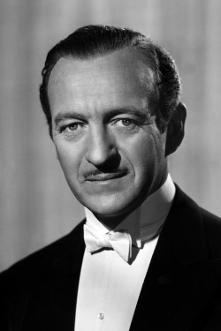
Folks at the shelter had already named him Clyde because it seemed a good name for a north Georgia boy. My family honored their choice and also gave him a well-suited nickname—David Niven.
The younger among us may not recognize the name. But others may remember the popular movie actor
known for his English accent, the well-groomed mustache, the easy dignity he lent to every role.
That’s why a little girl in Southern California fell in love with him all those years ago, watching his movies on black and white television.
And all that class wasn’t a contrivance, either. It was genuine, as others have noticed.
Following his death in 1983, his biographer Graham Lord wrote, “The biggest wreath, worthy of a Mafia Godfather’s funeral, was delivered from the porters at London’s Heathrow Airport, along with a card that read: ‘To the finest gentleman who ever walked through these halls. He made a porter feel like a king.’”
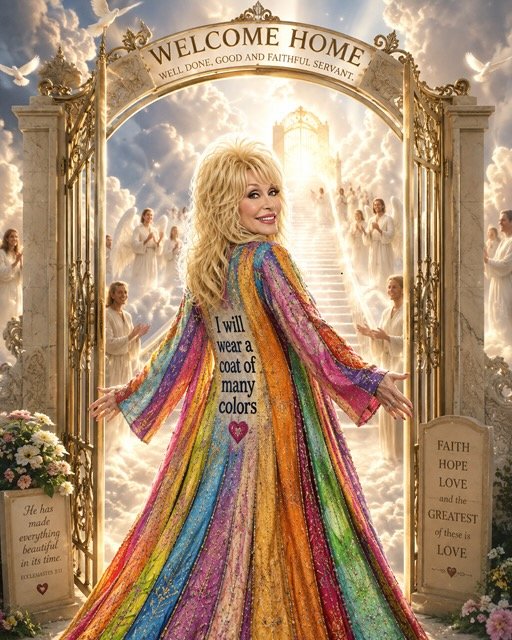
That’s right. You may scratch your head, or raise an eyebrow. But Dolly and I were part of that batch of American children born after World War II. I arrived during the Silent
Generation’s final throes. She Boomered her way out of Appalachia and into the hearts and minds of the American people for eight decades.
And this is how we grew up together: She, writing and singing songs. Me, listening and cherishing those beautiful words.
If I were to write a thank you to her it would be something like this:
Dear Dolly, your words had a special way of opening up my well-defended interior. Because of you, I felt a little less like the oddball who never quite fit in.
I respected you so much for honoring your mother’s gift of the Coat of Many Colors”despite being teased about it. You stood tall. I probably would have have been embarrassed. turned and run, hoping no one saw my tears.
I owe you a debt of gratitude for that gift of a lifetime. And, it’s no secret, millions around the globe have benefitted similarly. Dolly, you welcomed all with open arms, seeing in them their God-given worth.
Country music was your foundation, but you were loved and your music enjoyed beyond the sometimes artificial boundaries of genre.
Requiescat in pace, dear Dolly. I will always love you.
I grew up in the Los Angeles area of California. We didn’t exactly live within LA’s city limits. My family was one of the many pushing the boundaries outward in the city’s great suburbanization.
Entertainment-wise, black-and-white TV was commonplace in homes by the 1950s, 33rpm long-playing vinyl albums were popular, and the more affordable two-sided 45rpms made listening to the latest hits affordable for many teens.
And then there was AM radio, with a variety of programming, from live serial dramas, to early talk-radio, to ball games, to popular music.
My favorite station was KLAC, and one of my favorite programs in the 1970s was Stuart Hamblen’s Cowboy Church of the Air, and everyone knew to leave me alone for that hour.
Hamblen was a fixture of the Western-themed programming of that era.
Cowboy Church offered a melange of faith, spirituality, country/western music, stories, and Hamblen’s Christian message.
He made it very clear that he wasn’t a preacher. Rather, Hamblen said, he told stories instead of sermons. He mixed religious songs with homespun tales and a Christian message.
He also was a songwriter, with one of his best-known being It is No Secret.
Hamblen was a friend of a popular Hollywood cowboy, John Wayne. As the story goes, the two were visiting late one night at Wayne’s Orange County home. Hamblen was down in the dumps, and the Duke was trying to cheer him up.
The gist of Wayne’s message was: “God is good and we all know examples of God’s goodness. It’s not like it’s a secret…” Or words to that effect.
Later that night, now in his own home, Hamblen reflected on the conversation with his good friend.
Just then, the clock on his mantle started to chime its countdown to midnight.
Hamblen grabbed a pencil and started writing:
The chimes of time ring out the news, another day is through.
Someone slipped and fell, was that someone you.
You may have longed for added strength, your courage to renew. Do not be disheartened
I have news for you… It is no secret what God can do, what he has done for others he’ll do for you
With arms wide open he’ll pardon you. It is no secret what God can do.
Here is a link to one of the most popular recordings:
My mother was the middle of three sisters. There was one brother, also, but he’s not part of this story.
The eldest sister was named Trela; the youngest was Betty Lou. My mother’s name was Della Mae, and she was the source of sparkle and light for the entire family.
Betty Lou was mildly cognitively delayed, and Trela was emotionally crippled. Their parents considered neither of them capable of living on their own, or even having normal life experiences such as going out to the movies, or even a walk in the park. Or a boyfriend.
Timid in ways her kids knew her to be, for her sisters Della Mae was always bold, funny, and loving. Della Mae worked hard to become a registered nurse, though for six months of that schooling time she was flat on her back in a TB sanitarium.
In other words, Della Mae had her share of setbacks, but somehow her sisters saw only her wins.
Years ago, when my family visited them, I was singing old hymns for entertainment. I was 10-ish and, in a rare moment of extroversion, I asked Betty Lou what was her favorite hymn. “I’ll sing it for you,” I said.
I didn’t sing it because I didn’t know it. But I promised to learn it. I have to say that Pass Me Not became and remains one of my favorites, too.
They lived with their father Elmer until the day he died, napping in his rocker after a satisfying supper. They were well into their fifties by then, having never lived one moment on their own.
With the help of some social agencies, they carved out pretty good lives for themselves. And they finally found boyfriends.
When I now recall Betty Lou naming Pass Me Not as her favorite hymn, I understand why so much better than I did at ten.
Its words speak for so many who are cut off from a robust life through no fault of their own.
***
The Gospel this past Sunday was Matthew’s version of the Canaanite woman (Syrophoenician woman elsewhere). Her daughter has a demon, and the mother asks Jesus for healing. He declines, presumably because the woman and her daughter are Gentile, and Jesus lets her know that he was sent only to benefit the Jewish peoples.
She is not timid and continues to badger Jesus, who eventually heals her daughter because, he said, of the mother’s faith.
***
Hers was a first century version of PassMe Not, and it takes me all the way back to my aunt, deprived of so many opportunities because she was differently abled.
It was written in 1868 by prolific lyricist Fanny Crosby, who was blind. The tune is attributed to William Howard Doane, and the hymn appears today in 1,078 hymnals.
If you’re one of those showing up at mainline Protestant churches yesterday, there’s a good chance you heard about Jesus walking on water. It was the Gospel selection from Matthew.
Maybe your preacher rolled it into his or her sermon, as I did at St. Michael’s Episcopal Church in Coolidge, Arizona.
Walking on water is Jesus’ splashiest miracle yet. Not only because no one else can do it, but also because many of the thousands of people he has just fed in the wilderness are watching. Talk about an eyewitness list!
As spectacular as this aquatic miracle is, I am especially moved by how a hymnwriter in 1905 incorporated it into the words of Stand By Me, not to be confused with Ben King’s 1961 popular song of the same title. King’s work was essential to the popularity of the 1984 movie, also of the same title. It is also a soulful song that speaks to this same human need for human companionship and loyalty.
But—for me—it doesn’t have the power of the hymn. Charles Albert Tindley wrote his Stand By Me, with a heart for the broken, the lonely, the aging. Everyone who has encountered defeat, loss of purpose, and discouragement.
My favorite version is performed by Elvis Presley. Album: How Great Thou Art,Track 5.
We live in treacherous times. Actually, I suspect, all times are treacherous if we’re paying attention. Choose God or choose empire.
When Jesus’ enemies ask whether it is lawful to pay taxes, Jesus knows they are trying to trap him into speaking against a primary mechanism of the Roman regime: Taxes.
He asks to see a coin, which bears the image of the emperor. Then, the famous answer: Render unto Caesar that which is Caesar’s, and unto God, that which is God’s.”
It’s a two-faced answer, depending on interpretation. We, of course, believe that everything is God’s. Our daily steps and interactions, our treatment of one another, our being a faithful member of the family of God. Oh, and paying taxes, too.
Following Jesus is not a free pass to ignore rules that help sustain living as a community, many of which govern behavior mandated in the Ten Commandments. No killing, lying, stealing, and so on.
So, love God, pay your taxes, uphold the Ten Commandments. And, here’s another: Vote, which is how we change things whenever specific leaders get out of hand.
It’s a process that offers us the best hope possible. We don’t even need to remove any heads from our legal tender.
Tomorrow—July 29–we are offered the ever-appealing story of sisters Martha and Mary. They live along the path to Jericho, in a town called Bethany.
Lazarus, their brother, lives with them in what the gospeler Luke describes as Martha’s house. All three siblings are friends of Jesus, though how the friendship began we are left to wonder.
As Martha begins to whip up a dinner for their special friend, Mary follows him into the living space, sits on the floor, and listens intently to everything he says.
Martha is annoyed. And probably overwhelmed by all that needs doing in order to have dinner. She appeals to Jesus to have Mary help her.
But, no. He notes that, by sitting and listening to him, Mary has chosen “the better part.” He will not take that from her.
I can understand both positions. Maybe you do, too: Being a good hostess versus being a good friend.
This story often leads to conversation in which people—male or female—clearly identify with a particular sister. I’m a Mary. I’m a Martha.
I once engaged in such conversation, too. Nowadays, I am much more content realizing that Jesus needs both types of people to carry his message into the world, to be him to the many who suffer, who hunger and thirst, who crave even just a speck of hope, to know they are loved and are worthy of love. No matter what.