Is evil a “being,” a feeling, some personification of everything dark and corrupt in the world?
Some call it the devil.
Some call it Satan.
How do you know it? For me, it ‘s just simpler to call it the Devil.
I have had several acute experiences with evil and, may I say, with Evil.
In the fiction world Stephen King excels at weaving evil into plot line. In particular, his book Needful Things shows how the most innocent, kindliest of persons among us can commit dastardly deeds in order to obtain a simple heart’s desire.
While evil has an agent by the name of Leland Gaunt, his victims encounter evil in their own true nature: How far will I go to get what I want?
The Bible, both Old and New Testaments—does not offer one single, neatly worked-out doctrine of Satan. The imagery that we can find develops from the Hebrew Bible into the New Testament, and Revelation gathers several strands into an extraordinarily vivid cosmic drama.
The mid-century Christian writer C.S. Lewis understood something important about our fascination with Satan.
He warned against two opposite mistakes: refusing to believe in the reality of evil at all, and becoming so fascinated by evil that evil itself becomes the center of our attention.
Both mistakes are possible.
As for me, I encountered a presence of evil several times over a lifetime. One was especially vivid.
I was looking for a home that would accommodate my mother and me. She was growing more infirm, and we needed to be under one roof.
While touring the leading prospect, I noticed the master bedroom was a couple of steps below the main level. The agent motioned for me to go first.
Before moving, I scanned the interior with one sweeping glance, observing how dark it was, how ponderous was the heavy wooden furniture, and how off-putting were the twin six-foot-tall suits of armor flanking the kind-sized bed.
Wishing to move on, I raised a foot–but before my foot touched the step I felt a force. That’s the best description. A force, an impediment, that kept me from entering the room.
Message received. I quickly pivoted and headed back. The real estate salesperson was perplexed. I offered a weak smile paired with “Gotta go.”
I believe with all certainty that something extremely wicked had occurred in that space. It wasn’t safe, not even then nor for me. But I was spared by the spirit of God tapping the brakes for me.
That was a close encounter with whatever we call evil. What about you? Any encounters? Experiences? Close calls? I would love to hear from you.
At 80, I am finally old enough to read Annie Dillard. I also was late to join the Mary Oliver appreciation crowd. I attribute my tardiness to early Christian formation that frightened me more than it made me feel safe. Or loved.
I was made to be suspicious of anything about God or creation that wasn’t directly from the Holy Bible.
It took more than forty years to rid myself of the holy terror instilled in me. Writers such as Dillard and Oliver helped.
Where to start a remembrance of Annie Dillard? Let’s go back in time a bit.
Children in the 1950s used playground chants like “I made you look, I made you look, I made you read a story book” to tease each other when someone looked at something they pointed at.
One child would say “look” to trick another person into turning their head.
The rhyming chant was a quick way to claim a silly schoolyard victory.
When I learned last week of the death of author Annie Dillard, I realized the world was lessened by her passing. Lessened greatly. And I felt called to write a remembrance.
But then this little 1950s ditty started playing in my head, “I made you look….”
At first I felt something akin to shame. This great woman of words and thought had died. And how did I mark the passing? With words from a near-ancient childish chant.
But thankfully I did not get mired in my shame. Instead, I came to realize that, in spite of me, the unconscious had offered up a proper salute to Annie Dillard: She made us look. And look closely.
My new best friend, Art Intelligence, answered my question about where to start with Dillard for a deep dive into her spirituality, or theology.
A professed follower of Christianity, Dillard was not religious in the m sense of depending on a church, or a denomination, to do her thinking for her. She fits well, I believe, in the “spiritual not religious” queue of faith discussions in this generation.
While she doesn’t present a “systematic” theology, her microscopic look at the natural world nonetheless produced some ingredients of her faith, and perhaps ours.
Back to my friend Art, here are suggestions of the three best theologically bent books and the order in which to read:
For the Time Being (1999).
It is only about 220 pages, and it is extraordinarily dense. Dillard brings together birth, death, suffering, evil, God, Judaism, Christianity, mysticism, science, evolution, human uniqueness, and the sheer strangeness of existence. She moves from a maternity ward to the Holocaust, from sand and clouds to the Hasidic tradition, from Teilhard de Chardin to questions about divine omnipotence and mercy.
And here’s the particularly interesting thing: Dillard’s own website says that Pilgrim at Tinker Creek, Holy the Firm, and For the Time Being can be understood as a trilogy concerned with natural evil.
So if your question is, “What does Annie Dillard believe about God when she looks directly at the terrible and beautiful world?” Perhaps start here.
It’s not a theology book in the conventional sense. As one person says, “She doesn’t give you a system. She gives you a wrestling match.”
Holy the Firm
This is the one to read second, even though it was published in 1977.
It’s tiny—around 75 pages—but it may be the most concentrated dose of Dillard’s theology. She deliberately set out to write about what happened around her on a Puget Sound island over three days, and then an airplane crashes and a young girl is horribly burned. Dillard finds herself confronting the classic theological problem: If God is omnipotent, omniscient, and merciful, what do we do with suffering?
There’s a moth burning in a candle flame. There’s baptism. There’s beauty. There’s violence. There’s God.
According to Art, this offers the reader that astonishing Dillard quality of looking at something almost unbearably closely until it becomes a theological event.
Pilgrim at Tinker Creek
Only after those two would Art suggest we go to the famous one.
It’s the 1974 book that won the Pulitzer Prize, and it’s often treated as “the Annie Dillard book.” But if you come to it expecting a nature book, you can miss what she’s doing.
Dillard herself says that the book attempted to describe the Creator, if any, by studying creation.
That’s a very important key to her.
The creek, the praying mantis, the wasps, the sunlight, the parasites, the violence of nature—all of it becomes evidence in a gigantic argument about what sort of universe this is.
And that is why Dillard can be simultaneously filled with wonder and horrified by creation.
Other Dillard offerings:
Teaching a Stone to Talk
It’s a collection of essays rather than one sustained argument, and it contains the famous essay “An Expedition to the Pole,” which is one of the best places to encounter Dillard’s thinking about religious practice.
This is also where her famous “lash yourself to the pew” passage comes from—the idea that Christians have vastly underestimated what they are asking for when they pray for the Holy Spirit.
That passage is not an isolated bit of Dillard eccentricity. It is a window into her whole conception of Christianity: God is not a comfortable religious accessory. If the living God is actually present, something enormous is supposed to happen.
If you’re up for more, here’s another book Art thinks you would eventually want to read.
An American Childhood (1987).
Not because it’s primarily theological—it isn’t—but because it lets you meet the person who became Annie Dillard.
It is a memoir of her childhood in Pittsburgh, and it helps explain her extraordinary habits of attention: collecting facts, looking obsessively at things, reading voraciously, experiencing the world almost as an enormous mystery that needs to be examined. Her official bibliography identifies it as her memoir.
So, Art suggests saving that one for after you’ve fallen—or perhaps stumbled—into Dillard’s theological universe.
Clyde was a Five-Star, G-rated sorta dog, full of love and a fair amount of whimsy.
He was well-mannered, and adhered to prescribed boundaries. With some exceptions when instinct prevailed, like the time he uprooted everything in my luggage in hope of finding the pecans buried there. He found them, and I was afraid he was going to die from pecan poisoning. But he did not. At least not from that, and not then.
But, all of us die, especially, it seems, the good ones.
Clyde’s departure from this world happened quickly on Sunday, September 6, at a hospital in Milwaukee—cradled and rocked into eternity by his loving family.
He was adopted from a Milwaukee shelter after arriving with other dogs inbound from Georgia. We know nothing about his earlier life, but what we know for sure is the Clyde we knew was always a very good boy, except perhaps for the pecan caper.
Clyde was a red-bone coonhound, with courtly manners.
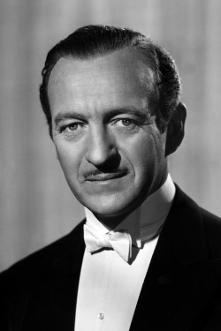
Folks at the shelter had already named him Clyde because it seemed a good name for a north Georgia boy. My family honored their choice and also gave him a well-suited nickname—David Niven.
The younger among us may not recognize the name. But others may remember the popular movie actor
known for his English accent, the well-groomed mustache, the easy dignity he lent to every role.
That’s why a little girl in Southern California fell in love with him all those years ago, watching his movies on black and white television.
And all that class wasn’t a contrivance, either. It was genuine, as others have noticed.
Following his death in 1983, his biographer Graham Lord wrote, “The biggest wreath, worthy of a Mafia Godfather’s funeral, was delivered from the porters at London’s Heathrow Airport, along with a card that read: ‘To the finest gentleman who ever walked through these halls. He made a porter feel like a king.’”
That’s right. You may scratch your head, or raise an eyebrow. But Dolly and I were part of that batch of American children born after World War II. I arrived during the Silent
Generation’s final throes. She Boomered her way out of Appalachia and into the hearts and minds of the American people for eight decades.
And this is how we grew up together: She, writing and singing songs. Me, listening and cherishing those beautiful words.
If I were to write a thank you to her it would be something like this:
Dear Dolly, your words had a special way of opening up my well-defended interior. Because of you, I felt a little less like the oddball who never quite fit in.
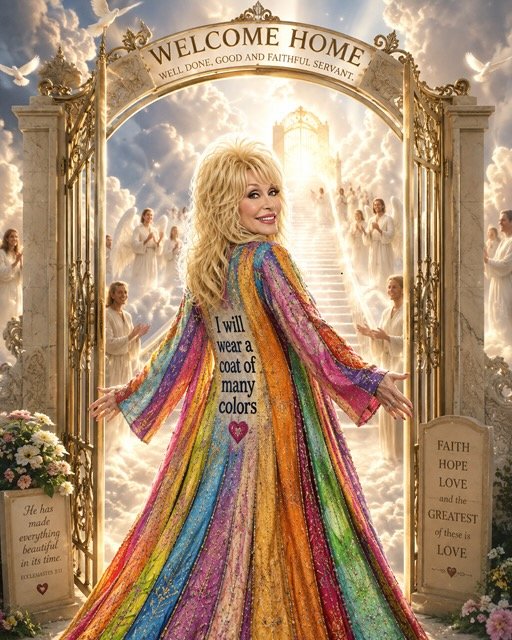
I respected you so much for honoring your mother’s gift of the Coat of Many Colors”despite being teased about it. You stood tall. I probably would have have been embarrassed. turned and run, hoping no one saw my tears.
I owe you a debt of gratitude for that gift of a lifetime. And, it’s no secret, millions around the globe have benefitted similarly. Dolly, you welcomed all with open arms, seeing in them their God-given worth.
Country music was your foundation, but you were loved and your music enjoyed beyond the sometimes artificial boundaries of genre.
Requiescat in pace, dear Dolly. I will always love you.
Mary Patricia Trainor 2026
Render unto Caesar
We live in treacherous times. Actually, I suspect, all times are treacherous if we’re paying attention. Choose God or choose empire.
When Jesus’ enemies ask whether it is lawful to pay taxes, Jesus knows they are trying to trap him into speaking against a primary mechanism of the Roman regime: Taxes.
He asks to see a coin, which bears the image of the emperor. Then, the famous answer: Render unto Caesar that which is Caesar’s, and unto God, that which is God’s.”
It’s a two-faced answer, depending on interpretation. We, of course, believe that everything is God’s. Our daily steps and interactions, our treatment of one another, our being a faithful member of the family of God. Oh, and paying taxes, too.
Following Jesus is not a free pass to ignore rules that help sustain living as a community, many of which govern behavior mandated in the Ten Commandments. No killing, lying, stealing, and so on.
So, love God, pay your taxes, uphold the Ten Commandments. And, here’s another: Vote, which is how we change things whenever specific leaders get out of hand.
It’s a process that offers us the best hope possible. We don’t even need to remove any heads from our legal tender.
A detour to lesser concerns
In a world of war and death and hunger and injustice. In a world where we grapple almost everyday with democracy on the brink of—what—extinction?
Truthfully, sometimes I long for a little escape. Something trivial, perhaps, or just something of no lasting concern.
So, I want us to take a little dive into something that mystifies me—but at the end of the day is of little to no consequence.
I’ve noticed what I believe to be an increase in a couple of unusual fashion choices (mostly) by women and older girls.
We all know that hem lines go up or down every decade or so. The legs of women’s pants go from narrow to flared and everything in between. Makeup to be noticed as makeup, to makeup not to be noticed.
But there are a couple of current popular body amendments that I don’t understand.
Granted, this comes from someone of the older persuasion, as well as from someone who has never been cool. Foolhardy, maybe, but never cool.
Have you noticed an increasing number of older girls and women paying for 1.) enlarged lips; and/or 2. enlarged buttocks.
God did not bless me with full lips. But I was convinced awhile back to have my lips colored permanently (really about six months). I’m lazy and I was drawn to the idea of having a permanent makeup look. But I’m over that now. Not in my budget, one; and, two, not something I care to do again.
Like other fads, big lips and big tushes will likely move over for something else.
I feel the need to say that never before in my lifetime have I known anyone who wanted a bigger behind.
And I’m guessing that dumping them once you’re tired of them might be a bit more complicated than lowering or raising a hemline. What do you think?
Did he always intend to use his dog rescue operation as a cover so he could shoot, kill, and bury a bunch of dogs, then hide them in mass graves, away from public view? I doubt it.
A heart-breaking story is still developing in Northern California, where officials continue their sweeping investigation of a rescue—ironically listed as a no-kill rescue—and its owner. Incidentally, when I started this blog entry the rescue and its owner were named. My guess is, conditions became volatile, and safety became a concern, so now officials are dealing with it anonymously.
I’ll admit that the mistreatment of animals is something I can only read about sideways. It’s too painful for a square-on look.
So, I have to leave the story, the case, to braver people, investigators, who have their hands full with the many avenues of abuse that allegedly were rooted at this rescue.
***
What’s left for me, then? For you?
Let’s look at this as a cautionary tale. Call it, “When love is not enough.”
God knows, and we do, too, that any form of animal welfare work is heartbreaking. It wears people down. Eventually cuts off how much their hearts can feel. Relentlessly. One horrifying case after another. Abandonment after neglect. Dumping. Starvation. Untreated illness.
In the dog and cat rescue world, even the good guys and gals can fall apart when their network of support dwindles.
Most likely we’ve read about dog and cat hoarding situations. An old man, an old woman, cooped up with too many animals. Things got away from them. They can no longer manage the endless repetition. The weight of the work carries on, but they no longer can. Animals die. Neighbors eventually call authorities.
Love has become a burden. Money is in short supply. Outside help dries up. The need is endless. And, then, there you are, the very picture of what you gave your life to prevent.
It’s a common enough trajectory for us to notice. And there are things we can do to help.
If you’re in this work and nearing the overwhelmed point, please reach out.
Comment on this blog and I will follow through.
Also, please check out the article, When Love is Not Enough. Resources are mentioned there. Link here.
This morning, I was quickly overtaken by three stories:
● Michele Obama receiving criticism for describing current state of affairs as a “janky” period?
● Trump’s request to have the Nuclear Code?
● And, learning today the Trump administration is stopping mandatory flu vaccines for the U.S. military?
As regards Michelle Obama’s remark, I also find everything coming out of Washington these days to be “janky.”
True, I had to look up the word. But it’s more or less what I would imagine:
From Google: “It often implies that an object is shaky, faulty, or a ‘cobbled together, makeshift solution. Common examples include broken technology, rundown cars, or poor-quality, unreliable items. Synonyms include shoddy, sketchy, junky, shaky, or flimsy.”
Now, thanks to Michelle Obama, I have a nifty, new word to describe current affairs.
Moving on, as a child of the Cold War era, nothing can be more horrifying than The Code falling into the President’s hands—any president. But especially this president and his janky administration.
Moving on to flu vaccines. Secretary Hegseth says the removal of mandated vaccines is a means of democratizing the individual military experience.
Is that really what we need for the military? Sure, if there’s medical reason to forgo the shot, I’m sure there’s always been provision for an exception there.
So what is it the secretary has really accomplished?
There comes a time when we cannot deny that Donald Trump is unfit to serve this country.
He isn’t our crazy Uncle Donnie who the family rolls out at special events.
The whole family is on alert and, at the first hint of trouble, Uncle Donnie is led away, smiling and waving with his free arm.
Mostly, this Uncle Donnie is harmless, though definitely someone capable of bringing shame at any moment.
But whatever “Uncle Donnie” has done that harms those he theoretically cares about, it doesn’t begin to touch the dangerous, embarrassing, dishonorable, mean-spirited antics of the other Donnie, you know, the one in the White House.
I don’t know if any remnants remain of the USA’s better days as the good guys and gals. But we have prayed that the President’s better angels would lead him to the right things.
Well, I fear the better angels are fighting an uphill battle against greed, wealth, mistreatment of people, illness, and starting a war with provocation or congressional approval.
And now, he apparently thinks he is God. What can we do?
As a private citizen, neither you nor I can launch the two remedies available under the law: The 25th Amendment, and Impeachment.
But we can create a clamor so thunderous it cannot be denied.
If you do not believe how out of touch with reality this Uncle Donnie is, consider the picture he posted and has since taken down: Him as Jesus, or a Jesus wannabe, hovering over a man’s hospital bed.
That is a serious distortion of reality. We all know it. But does he? That is the really worrisome concern.
Today, a good number of people ordained in the Episcopal Church will head to Phoenix for the Renewal of Vows service. I will be among them.
The service is paired with receiving Holy Oils blessed by the Bishop for use in churches throughout the coming year.
This is not only a local event. Across the country, deacons, priests, bishops attend such a service annually, many of those services traditionally occurring on the Tuesday in Holy Week. This year, that falls on March 31.
This is serious business, yet not grim. It is a joyous opportunity to remember not only our day of ordination, when promises were made, but also the intervening years of serving God’s people, both when it has been uplifting and also when it has borne the weight of tears.
This service we are called to provide is a twenty-four-seven calling. Over time and as the new wears off, we may find our spirit threatened.
But then we receive the Holy Week call to renew the vows made at our ordaining and we happily respond as we did then: I will.