Living These Days

Category: Public Square

  • Public Square

    ‘Shall we make a new rule of life…always try to be a little kinder than is necessary.’ J.M. Barrie, The White Little Bird. 1902.


    Be kinder more than necessary
    Those are words to live by. No one loses the argument, no one loses the fight. Everyone wins at the “soul level” if our focus is to be kinder than necessary.
    A side note: It is in The White Little Bird that Barrie introduces the character Peter Pan, though the Peter we would recognize is more fully developed in his writings over the next several years.


    It is difficult for me to imagine an argument against “more kindness.”


    “Be kinder than necessary” aligns well with the goals of major religions. We can debate, I suppose, as to how much kindness may be necessary. But if in a quest for precision I feel compelled to drag out the scales or the yard stick, I may be missing the big point.
    Maybe the call is really about being kinder than my first impulse, kinder than I may think is sufficient, kinder than if I think Someone is watching.
    For those of us awash in the deepening muddy trenches of U.S. American politics, being kinder than necessary (however we define it) just might be a good place of focus. Being kind does not require the surrendering of other important values. It simply suggests we keep one toe in the pool of shared human values while we do. 


    SPECIAL NOTE
    Stay tuned for my podcast, launching soon. The Wonder Files will debut in late September on most platforms where podcasts air. It also will be available on livingthesedays.me, this blog’s website.

  • Public Square

    My new friend Phil

    A few weeks ago we hadn’t a clue that the other existed. Now. Phil writes to me daily,
    but has yet to answer any of my emails.
    I suspected Phil might not be “real,” which was confirmed when his “boss” wrote to say Phil is not able to answer email, but that they are working on getting him those privileges.
    It all began when I responded online to a job opening for a chaplain at a local hospital. Phil was quick on the draw getting back to me. I hurriedly uploaded a current resume that clearly outlines my fields of experience: journalism, private school administration, and ministry.
    He was excited, he wrote, noting that he had many things that were right up my alley: occupational therapy, medical assistant, surgeon, and…you get the point. Today I got more: medical director, neurosurgeon.
    Apparently the only thing he picked up from my application and resume was the word “hospital.”
    When I reached out to correct this gross misunderstanding, I learned that Phil can’t reach back.
    So, whichever employers are being represented by this online recruiter, they are not being served well. Of course, neither am I and I have no recourse—but then neither have I paid any
    money.
    This is a pretty good example of an AI failure. I imagine Phil was programmed for key words, such as hospital, without nuance. It can probably be fixed, but how to even tell anyone?

    AI.
    We can fear it.
    We can worry about ethical uses.
    We can pretend that it has nothing to do with our lives.
    We can stomp our feet and threaten it.
    We can try to just wait it out.
    My strategy is to embrace AI, mostly because it intrigues me. Also, realizing it likely is not going away, I may as well try to understand what I can.
    As for me & Phil, the end is in sight. One-way communication has never been a successful game plan for relationships.

  • Public Square

    Kerr County Texas: When is the price too high?


    More than one hundred lives were lost in Texas flooding that began July 4. Eighty-six in Kerr County alone. And apparently that’s not the final count.


    We’ve read or seen numerous accounts of loss and sorry, bravery, heroics, tenacity, and love.


    Most of us became aware of the devastation when the Guadalupe River breached its banks and, in effect, demolished a girl’s summer camp–and much else.


    Families are devastated. What happened is unthinkable. Unimaginable. You drop your child off for a summer respite—and you never see them alive again. How does that happen?


    The blame-game has begun, I’m sure. Agency to agency. Parents to agencies. Maybe even parent to parent in cases where there wasn’t agreement on sending their child in the first place.


    Attorneys are circling, I’m certain, and lawsuits will strangle the courts for years to come.


    But if there’s a lesson for the future, we may find it, not in the courtrooms of tomorrow, but in meeting rooms of the past. Specifically from 2017.


    The Guadalupe River has a history of severe flooding. So in 2017, Kerr County applied for a grant to fund a million-dollar state-of-the art advance warning system.


    No grant was forthcoming. So, proponents sought funding from Kerr County’s budget. Denied as being too expensive. 
    I bring this up, not to vilify leaders of the past, but to inspire leaders now and in the future.


    Sure, it’s important to be wise with public money. But how could public money be better spent than on saving lives from a well known treacherous river?


    Here’s the full, AI verified story of the 2017 Kerr County plan to install a modern floodwarning system along the Guadalupe River—and why it never materialized:


    What actually happened in 2017?


       •   January 2017: The Kerr County Commissioners Court unanimously approved applying for a ~$975,000 FEMA grant (later cited as $980K or $1M) to develop a comprehensive flood warning system—including river gauges and sirens—in “Flash Flood Alley”.


       •   Mid2017: An engineering study (funded by the county at a cost of $50,000) recommended this system, estimating implementation would cost $750,000–$1M.


       •   The proposed system was modeled after tornado siren networks in nearby Comal County, plus upgraded flowgauges……cited as vital for monitoring and warning folks downstream at camps and river crossings.


    Why it wasn’t approved?


       •   Grant application denied: The FEMA grant—and a subsequent application after Hurricane Harvey in 2017–18—were both rejected, as those funds were prioritized for coastal and Harvey affected communities.


       •   Local funding roadblocks: With no federal funds, commissioners considered investing local dollars but ultimately shelved it. Budget constraints, taxaverse sentiment,
    and resident resistance—especially concern over disruptive sirens—were cited.


       •   One commissioner famously joked that sirens might drive him back to drinking, reflecting community pushback .

  • Public Square

    More (or less) about truth

    Photography, in its purest form, is as close as we can get to an eye-witness account without actually being present.

    It is for good reason that photography has been a staple of journalism for decades, After all, it is said that one photograph can “replace a thousand words.”

    Just try to describe in words that awesome moment in World War II history when U.S. Marines planted the American flag on Iwo Jima. Joe Rosenthal’s award-winning photo was etched on the minds of a generation. It tells the story that thousands of words cannot capture.

    Or try to replace with words astronaut Bill Anders’ 1968  photo of the moonrise over the Earth. The first time we saw “this fragile earth, our island home.”

    Yes, photographs have captured history for years to come. And will continue to do so.

    AND.

    Photographs can be manipulated so that they distort the truth.

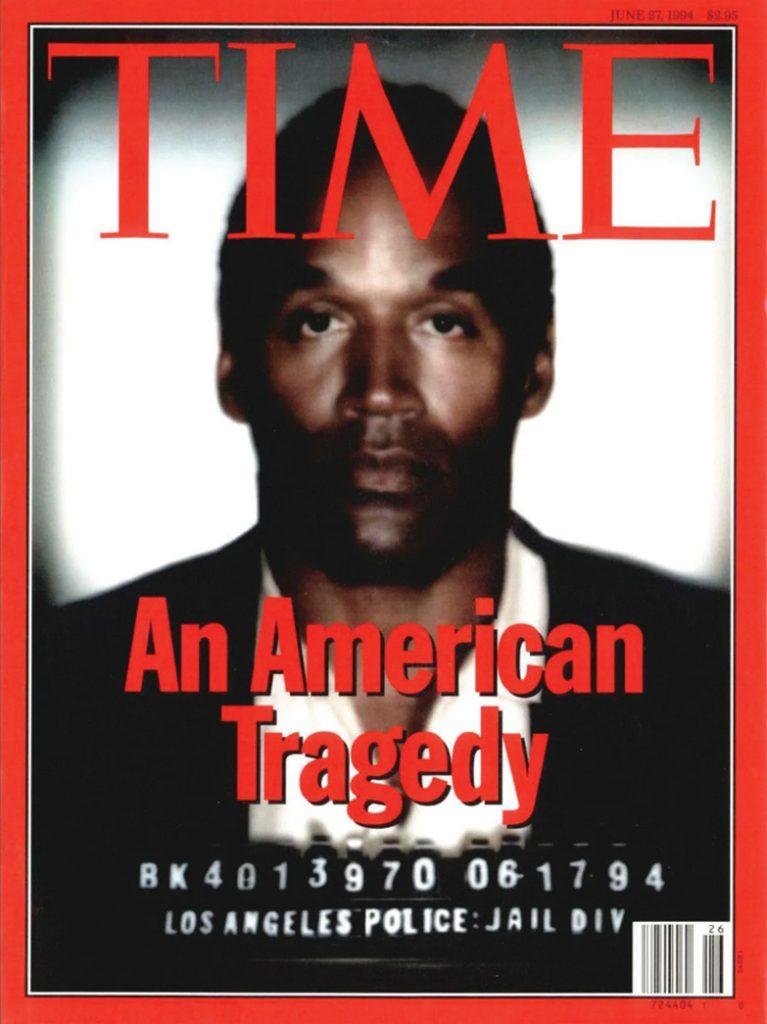
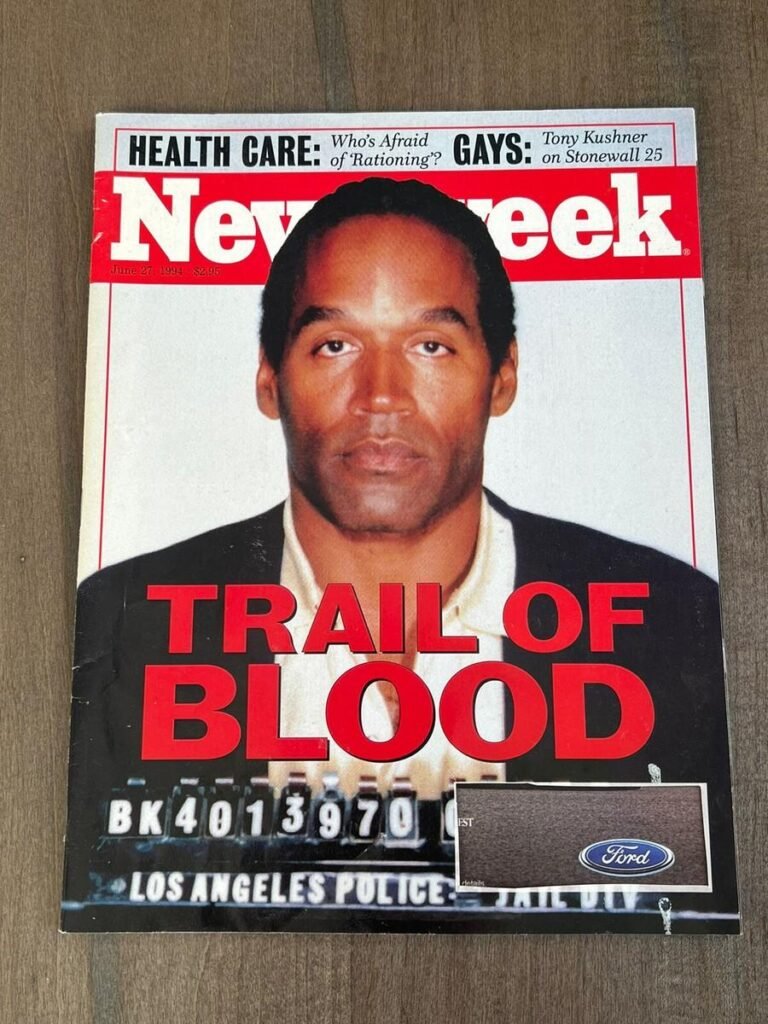
    In the 1994 murder trial of football hero O.J. Simpson, two national news magazines handled his jailhouse photos differently.  Newsweek ran the photo on the cover, without serious editing. Time carried the same photo, seriously doctored to make the suspect appear more menacing. The magazine was widely criticized for this, and comparing the two photos was a buzz around newsrooms for months to come.

    All of this pales with comparison to what Artificial Intelligence can do now. I have gotten to where I trust very little of what I see. What a shame.

  • Public Square

    What is truth?

    The answer to Pilate’s question “what is truth” seems more obscure each day. Truth in journalism is especially complicated nowadays.

    An erstwhile journalist, I am so frustrated with finding the truth in current affairs. Desperate for updated information on U.S. American politics, I scan news sites and, yes, social media, where I encounter many interesting reports. But before I can share them, I struggle with figuring out if they are true. Are they factual?

    As we know, the most powerful lie, the most convincing lie, is a half-truth. 

    Snopes and other fact-checking sites can only do so much. Nuance and artistry get in the way.

    In watching Reels, I see some mighty strange stuff. Reports and videos look “real” and may even be in part.

    Even so, and no matter how well done, some videos just scream out, “Joke.” Even I sometimes can tell when something’s amiss. For instance, there’s a video out there showing Vladimir Putin eating popcorn and laughing while watching President Trump’s June 14 Parade on television.

    Factual? I don’t think so. But who knows.

    We used to be able to count on news agencies presenting news with credibility. I fear those days are gone. I pray that I am wrong.

  • Public Square

    California, Here I Come


    My brother and I are native Californians. We started elementary school in the Los Angeles environs of the1950s, when duck-and-cover bomb drills were routine because then the agreed-
    upon great fears were Russians and nuclear armament. As native Californians, we were in the minority at school. I am sure it’s commonplace now. But wherever my classmates and I were
    from, we shared common enemies: Russians and nuclear bombs.


    It’s more nuanced these days. Who are the good guys and the bad guys now? Well, there’s a lot more gray.


    Remember the mid-century proliferation of Western movies? Even there the color of a cowboy’s hat communicated the “side” he represented: white hat, good guy; black hat, bad guy.


    In the 1950s and onward, we also had journalists and news entities who were respected for their commitment to telling the truth no matter the cost.


    But where we are today? When I see a headline of a news story, and then read the lead paragraph, all too often I wonder: What is the truth here? As for photographs, your guess is as
    good as mine: AI? A “real” photograph but tweaked by AI? Same problem.


    These days, if I want to share a story or a photo, I have to do my own fact-checking as best I can.


    So, what I am doing in this blog is providing two things that can be useful in the days ahead.


    First thing, consider this Latin phrase, Posse Comitatis. Or, more specifically, the Posse Comitatus Act. This is the law that limits the power of the federal government in state jurisdictions. Specifically, neither the federal government nor the U.S. president can singly send federal troops into a state for law enforcement purposes. In other words, President Trump illegally sent federal troops to California to assist In managing crowd control. He was not, he was not needed, not not invited, nor did he withdraw them when asked to do so by Governor Gavin Newsome who, who along with 49 other governor, may request federal troop support. If you wish to know more, here’s a link to Wikipedia.
    https://en.m.wikipedia.org/wiki/Posse_Comitatus_Act

    Second thing, know your rights before you need to. Here’s a link from Arizona ACLU. You can print this and take with you, leave in your car, or have in your pocket. Hand out to friends. If you think you will not be approached by immigration officers, I say, think again.
    https://www.acluaz.org/en/know-your-rights/what-do-if-youre-stopped-police-or-immigration-
    agents

    Here are the classic lyrics to California, Here I Come


    California, Here I Come
    (by Al Jolson, DeSylva & Meyer, 1924)


    California, here I come
    Right back where I started from
    Where bowers of flowers bloom in the sun
    Each morning at dawning
    Birdies sing an’ everything
    A sun-kissed miss said, “Don’t be late!”
    That’s why I can hardly wait
    Open up that Golden Gate
    California, here I come!

  • Public Square

    Paralysis

    By Mary Patricia Trainor 

    Donald Trump won the 2024 popular vote, it is true. But not by a landslide. There was no mandate of the people. He didn’t even win by a majority.

    The final count? 49.9 percent. That’s the number published in The Washington Post in its January 20, 2025 edition.

    Most of us already knew this. So why is he acting like the vast majority of Americans wanted him in office? Because he can, without challenge. 

    Why no challenge? Because people are afraid. We’re riled up. We’re exhausted. We’re agitated and angry, and we stay that way because no one is fighting for us, or so it seems.

    And silent anguish helps no one.

    Since his January 20 inauguration Trump has walked all over traditions and laws, pretty much unimpeded. An occasional court has curbed his and Elon Musk’s wanton rampage in Washington. Tsk, tsk.

    Democrats must find their backbone. Republicans who are not MAGA must join them. Independents and Libertarians, it’s time to enlist in the effort, or none of us will have a country to bicker about.

    I’m including two links: one to a Ralph Nader post about silence; and one to a video from Dr. Lorilet Monegro on the psychological power of pre-programmed repetitive language.

    Mr. Nader:

    Dr. Lorilet:

    https://www.facebook.com/share/r/1Ke7wuEhxp/?mibextid=oKfgLb

  • Public Square

    Ready to serve

    Every day within the new Washington regime is like a ride on Stratosphere X-Scream in Las Vegas. The ups, the downs, the being dangled over the Strip nearly 900 feet up.

    While the playful analogy may suggest that one terrifying event is equivalent to another, nothing is further from the truth.

    Because riding the X-Scream is a choice, and those who ride report that it’s a great trip.

    Not so for the horrifying ride America is taking at the hands of an unelected official wandering through Washington departments like a farmer taking a scythe to his hayfield. It feels like we are being presented with a new horror every day. Jobs lost. People unemployed. Families devastated. Darting about from one area to another may seem chaotic, and it also feels purposeful, like a shell game. Move the shells around quickly enough and very few can determine where the pea ends up. The average American cannot keep up with the hurried pace and dizzying shakeups. Nor can we measure the best way to combat the craziness and stop the nonsense while it can still be stopped.

    The courts have been helpful in slowing a few things down. But more help from Congress is not readily available at the moment. A few solid Republicans must martial the courage it will take to face down the madness. History will describe them as heroes, but that will take awhile. In the meantime they must face a vengeful president who does not know how to negotiate and, more than that, is known for getting even with people who cross him.

    And we mere citizens, we don’t get excused from the courage hook either. I feel big change in Washington cannot occur without us. Our role is more confused, less clear. We are the citizenry, and our voices can empower those we have elected to the House and Senate to represent us. Whereas speaking up is THEIR job, they need our backing to do it. But we all have daily lives, work, school, caretaking a relative. These are fundamental responsibilities that should not be shirked.

    What we need is a call to duty, and a catalog of duties that are doable–big or little–that will further the cause of protecting the American democracy. Somehow Democratic leadership needs to get itself organized and start rallying those who cherish freedom. If we don’t get our act together, I fear there is a point in time where our action may be too late.

    What a sorrowful state of affairs. What can we do?

  • Public Square

    5 Calls Can Help


    Maybe you’re feeling as I do, in somewhat of a liminal state. That place between this and that. That space between the jump off and the landing. A feeling of being unmoored, perhaps in danger, but how can we tell?

    A liminal state can be kind of exciting for adrenaline fans, kind of frightening for the already-anxious.

    What I am defining as a liminal state is the current condition  of affairs in the United States of America. In the words of an old song, are we going ninety miles an hour down a dead end street?

    Too many changes, too quickly, with questionable hands at the wheel, decisions seeming rash, abrupt, reckless?

    Maybe you even voted for the man at the top, but never expected such quick and extreme actions in such a variety of directions, as if the latest hurry-up is intended to distract us from our worry over previous decisions. 

    For sure, it’s a way to paralyze voters. If we don’t like something that is happening, what are we to do? Wait to see if the next uprooting is even more upsettling. Or the one after that? Or the one after that? Will we act in time?

    Well, I’m done with being paralyzed. And you can be, too. A friend told me about an “app” that lets me register my thoughts immediately with elected officials, the only people who can help—besides the courts.

    Here’s the app. It’s name is 5 Calls. It identifies current issues that may concern you and me, and (once you’ve entered a ZIP code) you receive names of your federal representatives and how to connect to their offices. It provides–should you feel the
    need–sample comments you can use or incorporate with your own content. You can also do this online. Here’s a link to the 5 Calls web site.

    As far as I can see, this puts decision-making into the hands of the people affected–exactly where it belongs.

  • Public Square

    People who need people

    This year’s Academy Awards will be broadcast on March 2. For some people, this coming Sunday’s Superbowl tops their TV year. For me, it is the Oscars.

    Thinking about today’s blog theme, belonging, takes me back to 1969, when Barbra Streisand won the award for Best Actress for Funny Girl. (There was a tie for the Best Actress award in 1969. Katharine Hepburn won for her role in The Lion in Winter.)

    Here’s the thing. I don’t remember much about the movie, but I sure remember her singing People Who Need People.

    I was in my early 20s, and fell in love with the song. I was sure it pertained to me.

    It was romantic, implying that needing people is the key to opening love’s doors.

    People, people who need people, are the luckiest people, the song says.

    But as with so many things that stir the heart and rouse the soul, needing people doesn’t guarantee a life filled with joy. Or, at least that’s been my  experience.

    Besides the misery that loneliness can bring, scientists are now considering the negative health effects of protracted loneliness. In a country where health care developments lead to longer lives, it seems timely to consider the quality of the those longer lives since much of them may be spent living as a single person.

    Feeling as if we belong somewhere, to someone, can take the edge off of loneliness’ impacts on you or those you love. Below I have include AI-assisted research on problems and solutions of loneliness.

    1. Health Consequences – Chronic loneliness is linked to an increased risk of heart disease, high blood pressure, weakened immune function, and cognitive decline, including a higher risk of dementia. It can be as harmful as smoking 15 cigarettes a day.

    2. Mental Health Effects – Loneliness is strongly associated with depression, anxiety, and increased stress levels. It can contribute to sleep disturbances and lower overall well-being.

    3. Brain and Cognitive Function – Research shows that loneliness affects brain structures involved in emotional regulation and social cognition. It can impair memory, focus, and decision-making abilities.

    4. Social and Behavioral Effects – Loneliness can create a negative cycle where individuals withdraw from social interactions, making it harder to reconnect. It can also lead to increased reliance on social media, which may or may not alleviate loneliness.

    5. Age and Loneliness – While loneliness can affect all ages, it is particularly common among older adults due to factors like retirement, loss of loved ones, and decreased mobility. However, younger generations also report high levels of loneliness, often linked to digital communication replacing in-person interactions.

    6. Community and Cultural Factors – Cultures that emphasize strong social connections and intergenerational living tend to have lower levels of loneliness. Social structures, such as community groups and religious organizations, can serve as protective factors.

    7. Solutions and Interventions – Effective ways to combat loneliness include fostering meaningful social interactions, engaging in volunteer work, adopting pets, participating in group activities, and seeking therapy when needed. Some studies suggest that structured programs, such as social prescribing (where doctors recommend community activities), can help alleviate loneliness.